


Video Guides
Measure the Width
(Choose Your Pole Size and Position)

For pole not installed
- Height Above the Window
We usually recommend fitting the pole or track 15–25cm (6–10") above the window frame. Hanging curtains higher helps create the look of taller windows and adds a more elegant finish.
- Width Beyond the Window
Extend the pole or track 15–38cm (6–15") beyond each side of the window frame, where space allows. This gives room for the curtains to stack back neatly and lets in more natural light when open.

For pole installed
Measure the full width of the pole or track, excluding decorative finials, and note the measurement.
Choose Your Curtain Fullness by Header Style
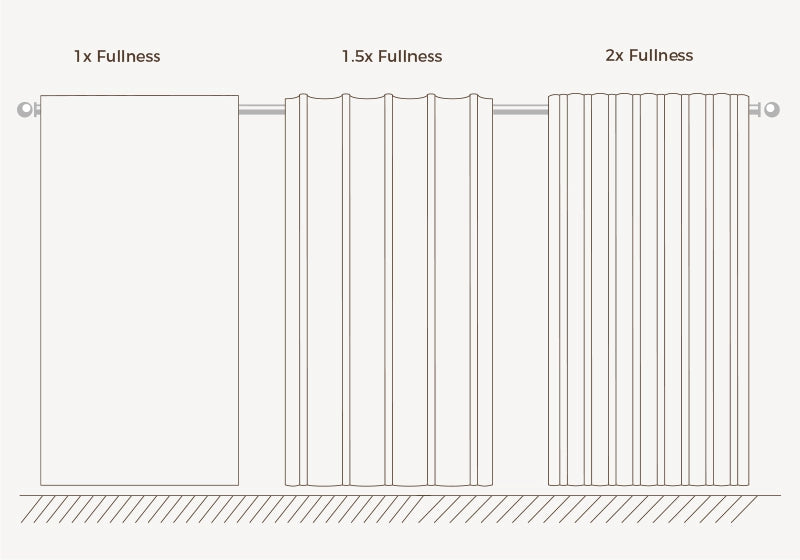
Fullness refers to how much fabric is used to create folds and drape. More fullness gives a richer, fuller appearance, while less fullness creates a cleaner, neater look.
Pleated Curtains
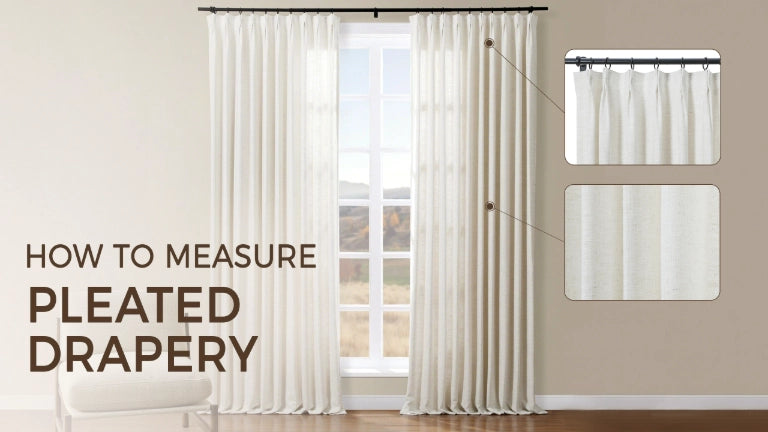
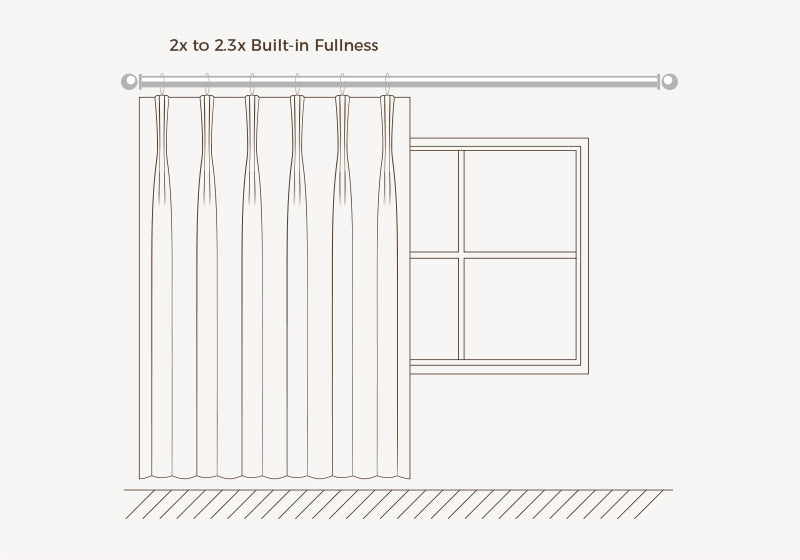
Our pleated curtain styles already include built-in fullness, so no extra width needs to be added.
- 2x built-in fullness for Pinch Pleat, French Pleat, Tailor Pleat, Inverted Pleat and Goblet headings
- 2.3x built-in fullness for Triple Pleat, Triple French Pleat and Triple Tailor Pleat headings
This creates a beautifully shaped, luxurious finish as standard.
If you prefer a fuller look, you may choose to add around 1.5x additional width. For fullest look, add 2x additional width, though this is entirely optional.
Soft Top & Eyelet Curtains
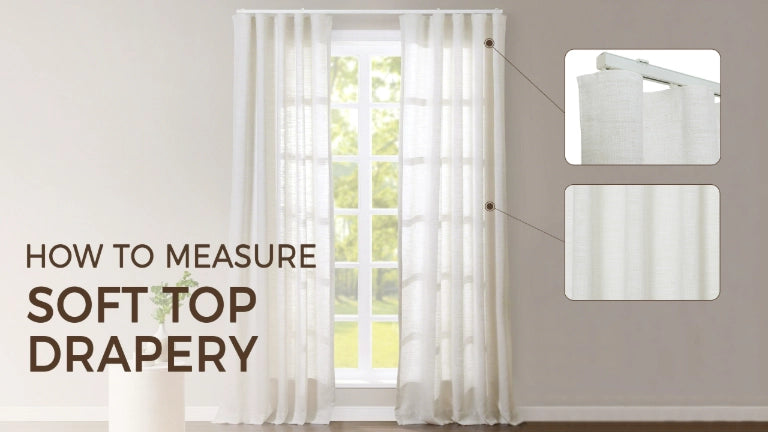
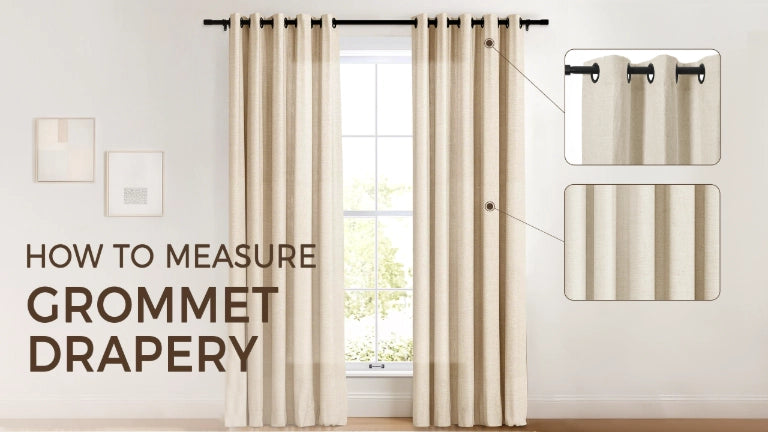
These styles are supplied at 1x flat width, so you should choose additional fullness depending on the look you prefer.
Recommended fullness:
- 1.5x track/pole width = soft, neat folds
- 2x track/pole width = fuller, standard gathered look

Wave Fold Curtains
Wave Fold curtains include 2x built-in fullness as standard. This means the finished width you order already includes the fabric required to create the wave effect, so no extra fullness is needed. TWOPAGES offers two Wave Fold options:
Belt Hook Type
Uses hooks attached to a sewn carrier tape.
Tape Buckle Type
Uses integrated tape carriers sewn into the curtain heading.
| STYLE | FULLNESS | WIDTH TO ORDER |
|---|---|---|
| Pleated | Included | Pole width ÷ panels |
| Ripple Fold | Included | Pole width ÷ panels |
| Eyelet | Choose 1.5x–2x | Pole width × fullness ÷ panels |
| Soft Top | Choose 1.5x–2x | Pole width × fullness ÷ panels |
What Does Finished Width Mean?
Finished width is the width value you select for each curtain panel when ordering. It tells us how wide the completed panel should be.
Depending on the header style, this width may be measured across the flat top of the panel or across the finished heading when the curtain is fully extended. It is not the window frame width, not the decorative finial-to-finial length, and not the stacked width when the curtains are open.
Use the diagrams below to see where the ordered width starts and ends for each header style. Then use the formula below to calculate the correct finished width to order.

Finished width is measured from the outside edge of the first pleat to the outside edge of the last pleat when the panel is fully extended.
Pleated fullness is already sewn into the curtain, so the ordered width is the coverage width of the finished panel. No extra 1.5x or 2x width is needed.

Finished width is measured flat across the top of the panel, from the left finished edge to the right finished edge.
Soft Top curtains are supplied as flat-width panels. The extra width you order creates soft folds when the curtain is gathered onto the pole or track.

Finished width is measured flat across the top of the panel, from the left finished edge to the right finished edge.
Do not measure the stacked width on the pole. Eyelet / Grommet curtains need extra flat width to create folds, usually 1.5x–2x the pole width.

Finished width is measured along the track from the first carrier or attachment point to the last when the panel is fully extended.
Wave Fold curtains include 2x built-in fullness as standard, so the ordered width is the coverage width you need. Do not multiply by 2 again.
Now that you know what finished width means, use the formula below to calculate the single panel finished width to order.
Example:
If your pole/track full width is 100 inches and you want 2 panels:
| Header Style | Pleated Style | Soft Top Style | Eyelet Style | ||
|---|---|---|---|---|---|
| Example Window Frame Width (cm) | 200 | 200 | 200 | ||
| Example Rod Full Length (End to End) (cm) | 260 | 260 | 260 | ||
| Your Selected Fullness Ratio | 1x | 1.5x | 2x | 1.5x | 2x |
| Panel Quantity (panel) | 2 | 2 | 2 | 2 | 2 |
| Single Panel Width to Order (cm) | 130 | 195 | 260 | 195 | 260 |
Measure the Drop(Start point &End point)
Find the right Start Point
How to measure curtain drop correctly:
measure from the correct starting point based on heading style.

From the curtain hook's eyelet ring.

From top of pole down to the desired end place.

From top of pole down to the desired end place.

From bottom of track down to the desired end place.
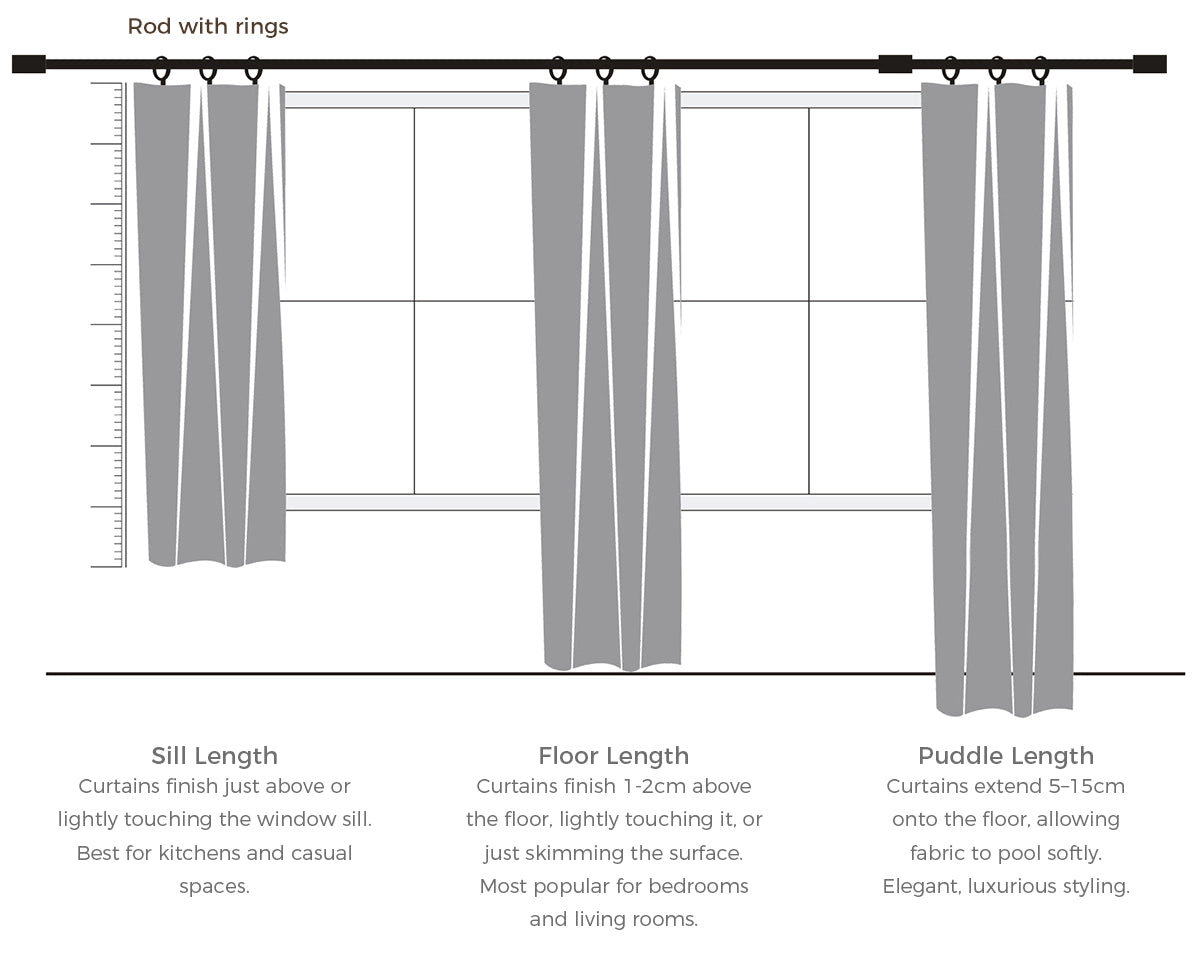
Find Your Perfect End point
FAQs
Should curtains touch the floor?
Should curtains touch the floor?
Most customers choose floor-length curtains for a premium finish.
Are pleated curtains already full?
Are pleated curtains already full?
Yes — fullness is built into pleated styles.
What’s the difference between measuring width and measuring drop?
What’s the difference between measuring width and measuring drop?
Curtain measurements include both width and drop. Width is the horizontal span of your pole or track, which is used to calculate fabric fullness. Drop is the vertical length from the top fixing point to your chosen end point (Refer to "Measure the Drop" in Step 3).